
The Cyclical Model of Clinical Supervision

Benefits and Application for Supporting the Supervisee
Clinical supervision is a fundamental aspect of professional practice, providing practitioners with a safe and structured environment to reflect on their clinical work, develop professional competence, and ensure high standards of client care. Effective supervision supports both the wellbeing of the supervisee and the quality of services delivered to clients. One framework that facilitates this process is the Cyclical Model of Clinical Supervision. This model recognises supervision as a continuous process of reflection, learning, action, and evaluation, enabling supervisees to integrate theory, skills, and experience into their clinical practice.
The cyclical nature of the model promotes ongoing professional development by encouraging supervisees to regularly reflect on their experiences, identify areas for growth, implement changes, and evaluate outcomes. As a result, the model contributes to safe, ethical, and effective clinical practice.
The Cyclical Model of Clinical Supervision
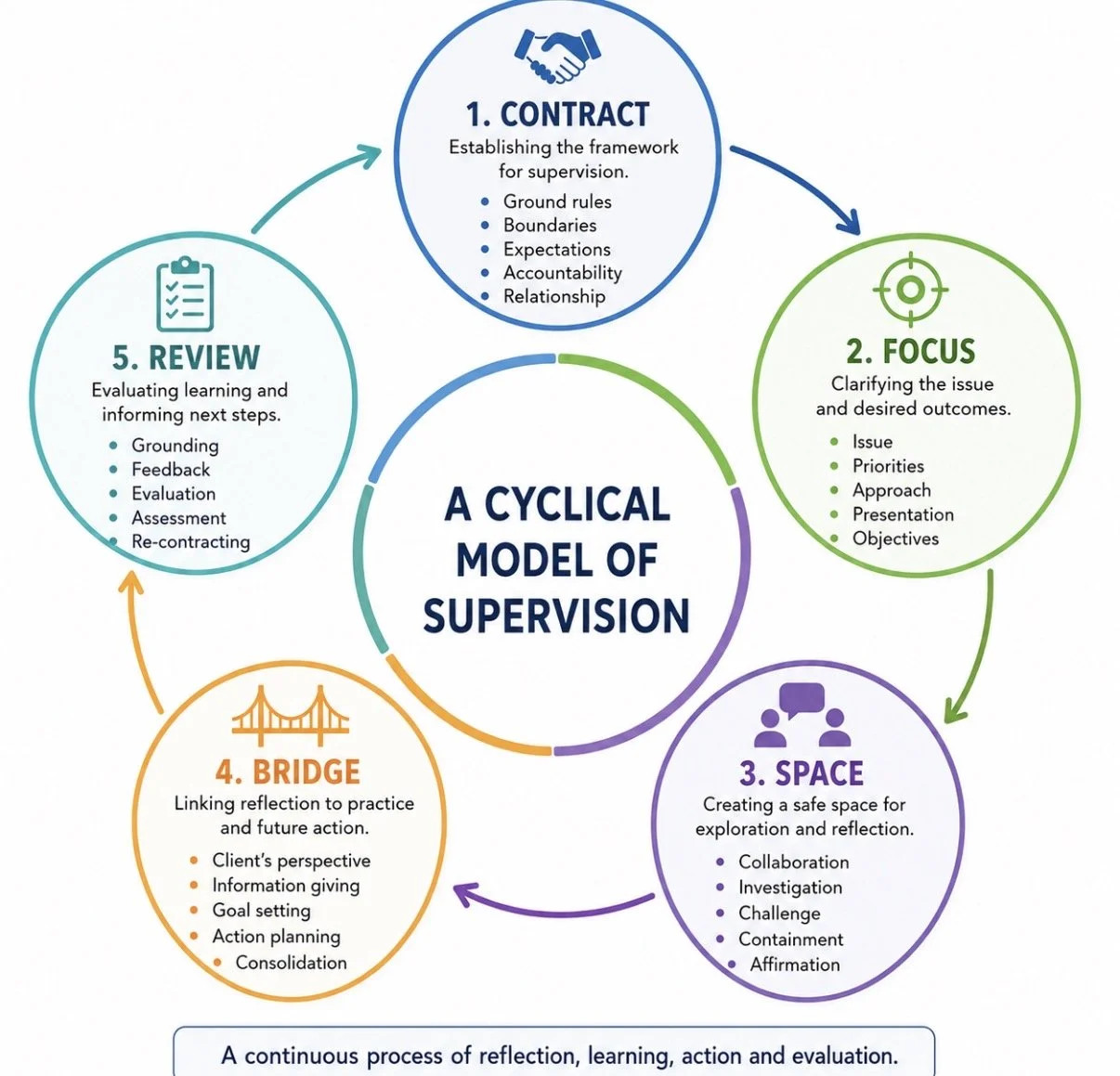
The Cyclical Model of Clinical Supervision consists of five interconnected stages: Contract, Focus, Space, Bridge, and Review. Together, these stages create a structured framework that supports reflective learning and professional development.
Contract
The supervision process begins with establishing a clear supervisory contract. This includes discussing confidentiality, professional boundaries, roles, responsibilities, expectations, and accountability. The contract provides a foundation for trust and psychological safety, allowing the supervisee to openly discuss clinical concerns, challenges, and learning needs.
Focus
The focus stage involves identifying the specific clinical issue, client presentation, ethical concern, or professional challenge that the supervisee wishes to explore. Clarifying the focus ensures that the supervision session remains purposeful and addresses the supervisee's developmental needs.
Space
The space stage provides an opportunity for reflection and exploration. Within a supportive supervisory relationship, the supervisee is encouraged to examine thoughts, emotions, behaviours, and clinical decision-making processes. The supervisor facilitates discussion through questioning, reflection, affirmation, and constructive challenge, helping the supervisee gain deeper insight into their clinical practice.
Bridge
The bridge stage links reflection to clinical action. During this phase, the supervisor and supervisee collaboratively develop strategies, identify learning goals, and create action plans that can be implemented within clinical practice. This stage ensures that insights gained during supervision translate into meaningful professional development and improved client care.
Review
The review stage involves evaluating progress, assessing the effectiveness of interventions, reflecting on learning outcomes, and identifying future development needs. Feedback is exchanged, and the supervision process is reviewed to ensure that it continues to meet the supervisee's professional requirements. The review then informs the next supervision cycle.
Benefits of the Cyclical Model in Clinical Supervision
Promotes Reflective Practice
Reflective practice is a key component of clinical competence. The cyclical model encourages supervisees to critically examine their clinical work, helping them develop a deeper understanding of their professional strengths, limitations, and areas for growth.
Enhances Clinical Decision-Making
Through structured reflection and exploration, supervisees are better able to analyse complex clinical situations, consider alternative interventions, and make informed decisions that support positive client outcomes.
Supports Professional Development
The model provides a continuous framework for learning, enabling supervisees to identify developmental goals and build confidence in their clinical abilities over time.

Encourages Ethical Practice
By regularly discussing ethical dilemmas, professional boundaries, and accountability, the model supports safe and ethical clinical practice while reducing the risk of professional errors.
Strengthens the Supervisory Relationship
The emphasis on contracting, collaboration, and feedback fosters trust and openness between supervisor and supervisee. A strong supervisory relationship promotes honest reflection and facilitates professional growth.
Improves Client Care
As supervisees develop greater self-awareness, clinical competence, and confidence, they are better equipped to provide effective, evidence-based care to clients. Consequently, supervision contributes directly to improved client outcomes and service quality.
Using the Cyclical Model to Support a Supervisee
In clinical supervision, I use the Cyclical Model to provide a structured framework that supports the supervisee's learning and development. The process begins by establishing a clear contract that outlines expectations, confidentiality, and professional responsibilities.
The supervisee is then encouraged to identify a clinical issue requiring exploration. For example, a supervisee may present a case involving a client experiencing anxiety, trauma, or difficulties engaging in treatment. Together, we establish a clear focus for the supervision session.
During the space stage, I encourage the supervisee to reflect on their clinical interventions, emotional responses, and understanding of the client's experience. Through reflective questioning and collaborative discussion, the supervisee is supported in exploring alternative perspectives and identifying areas for growth.
The bridge stage enables us to develop practical strategies that can be implemented within future clinical sessions. This may include adapting therapeutic techniques, improving communication skills, enhancing risk assessment practices, or developing greater confidence in managing complex presentations.
Finally, during the review stage, we evaluate the effectiveness of these strategies and reflect on the supervisee's learning. This ongoing evaluation helps identify further developmental needs and informs future supervision sessions, ensuring that professional growth remains continuous.
Conclusion
The Cyclical Model of Clinical Supervision provides a valuable framework for supporting supervisees in their professional development. Through the stages of Contract, Focus, Space, Bridge, and Review, the model encourages reflective practice, enhances clinical decision-making, and promotes continuous learning. By creating opportunities for reflection, feedback, and action planning, the model helps supervisees develop the knowledge, skills, and confidence required for effective clinical practice. Ultimately, the cyclical approach not only benefits the supervisee but also contributes to improved client care and safer professional practice.